 11, Nov
Cloud Mining vs. Traditional Crypto Mining
Cloud Mining vs. Traditional Crypto Mining: What’s the Difference?
Cryptocurrency mining can be approached in several different ways, but two of the most commonly discussed models are traditional cryptocurrency mining and cloud mining.
Although both involve computing power being used to participate in cryptocurrency mining, the way that computing resources are obtained and managed is very different.
Traditional mining generally requires the miner to purchase, install, power, cool, and maintain physical mining hardware. Cloud mining, on the other hand, allows users to access mining capacity provided by a third-party operator without having to install mining equipment at home or operate a mining facility themselves.
Understanding these differences is important for anyone researching cryptocurrency mining for the first time.
What Is Traditional Crypto Mining?
Traditional cryptocurrency mining involves directly operating mining hardware.
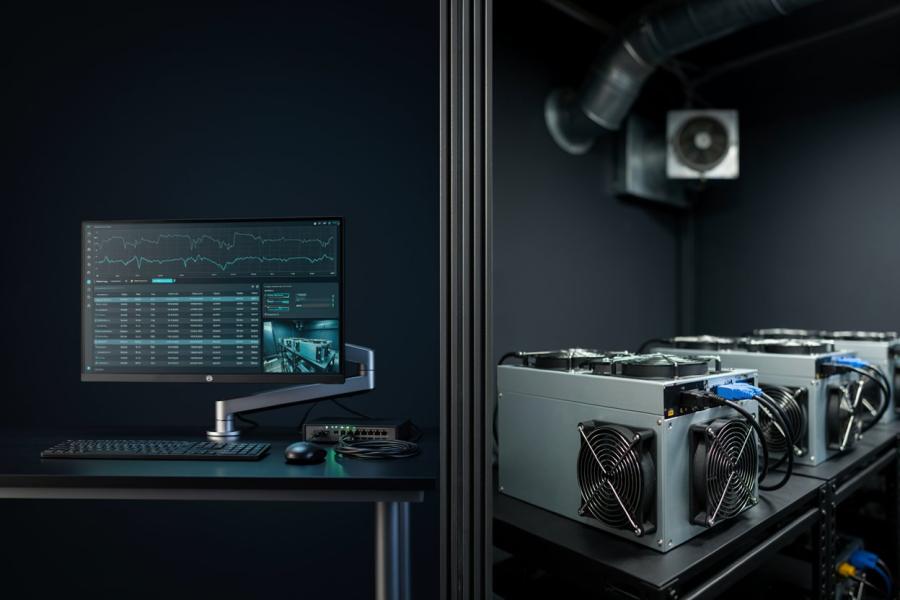
A miner typically purchases specialized equipment such as ASIC miners, installs the machines in a suitable location, connects them to electricity and a network, configures the mining software, and keeps the equipment running.
For Bitcoin mining, specialized ASIC hardware is commonly used because Bitcoin's proof-of-work network requires substantial computational power.
Operating physical mining equipment also involves several practical responsibilities, including:
Electricity consumption
Hardware purchasing
Equipment installation
Cooling and ventilation
Internet connectivity
Hardware maintenance
Noise management
Firmware and software configuration
Equipment repairs
Mining-pool configuration
The miner therefore has direct control over the physical infrastructure, but also takes responsibility for its operation.
What Is Cloud Mining?
Cloud mining is a different approach.
Instead of purchasing and operating mining hardware personally, a customer obtains access to mining capacity provided by a cloud-mining operator.
The physical mining equipment remains at a professional facility, where the operator is responsible for infrastructure such as electricity, cooling, networking, hardware deployment, and general maintenance.
Depending on the provider and contract structure, customers may purchase or rent a specified amount of computing capacity for a particular period.
The customer can then monitor information about the associated mining activity through the service's platform.
This means cloud mining can remove many of the technical and physical requirements associated with operating mining hardware directly.
The Biggest Difference: Who Operates the Hardware?
The simplest way to understand the difference is to look at hardware ownership and responsibility.
With traditional mining, the individual miner operates the equipment.
With cloud mining, the physical equipment is operated by the service provider.
For example, a traditional miner might purchase several ASIC machines and install them in a dedicated facility. That miner must arrange electricity, cooling, networking, maintenance, and repairs.
A cloud-mining customer generally does not need to handle those physical tasks directly because the infrastructure is managed by the provider.
Hardware and Infrastructure
Physical mining requires a significant amount of infrastructure.
ASIC miners generate heat and consume substantial electricity, so a suitable mining environment needs appropriate power distribution and cooling.
A professional mining facility may contain:
Multiple ASIC mining machines
Electrical distribution systems
Industrial ventilation
Cooling equipment
Network infrastructure
Monitoring systems
Backup and maintenance equipment
For an individual, building this infrastructure can be complicated and expensive.
Cloud mining moves much of this infrastructure responsibility to the service provider.
The customer interacts primarily with the service platform rather than with the physical machines.
Electricity Costs
Electricity is one of the most important operating expenses in cryptocurrency mining.
A traditional miner pays directly for the electricity required to operate their equipment.
The total cost depends on factors such as:
Hardware efficiency
Electricity price
Mining duration
Network difficulty
Number of machines
Cooling requirements
In cloud mining, electricity and infrastructure costs are generally incorporated into the provider's operating model or contract pricing.
This does not mean electricity becomes free. Instead, the customer is accessing mining capacity through a service rather than paying the facility's utility bills directly.
Understanding how electricity and maintenance costs are incorporated into a cloud-mining contract is therefore important before choosing a service.
Maintenance and Repairs
Physical mining equipment requires maintenance.
Fans can fail, power supplies can develop problems, networking equipment can malfunction, and mining machines may require configuration or replacement.
Traditional miners are responsible for dealing with these problems themselves or paying someone to handle them.
Cloud-mining customers generally do not physically maintain the machines.
The provider is responsible for keeping its mining infrastructure operational according to the terms of its service.
This can make cloud mining more convenient for users who do not want to manage specialized hardware.
Technical Knowledge
Traditional mining usually requires more technical involvement.
A physical miner may need to understand:
ASIC configuration
Mining pools
Network settings
Electricity requirements
Cooling
Hardware performance
Firmware
Hardware troubleshooting
Cloud mining can reduce the amount of technical work required from the customer because much of the infrastructure is managed by the provider.
However, this does not mean customers should ignore the technical side completely.
Understanding basic concepts such as hashrate, mining difficulty, fees, contract duration, and mining rewards can help customers evaluate a cloud-mining service more effectively.
Initial Equipment Investment
Traditional mining normally requires purchasing physical mining equipment.
ASIC miners can represent a significant upfront investment, particularly when multiple machines are involved.
The miner also needs a suitable location and supporting infrastructure.
Cloud mining generally does not require the customer to purchase individual ASIC machines.
Instead, the customer purchases access to a mining service according to the provider's available plans or contract structure.
This can lower the physical barrier to participating in mining, although the economics and risks of the specific contract still need to be evaluated carefully.
Control Over the Mining Hardware
Traditional mining provides direct physical control.
If you own the machines, you can decide where they operate, how they are configured, and which mining pool or supported cryptocurrency they participate in.
Cloud mining provides less direct control because the physical infrastructure belongs to or is operated by the service provider.
The customer is therefore relying on the provider's infrastructure, operational practices, contract terms, and reporting.
This difference in control is one of the most important factors separating the two models.
Flexibility
Traditional mining can provide considerable flexibility once the equipment is owned.
A miner can potentially change configurations, move equipment, upgrade hardware, or change operational strategies depending on the hardware and cryptocurrency being mined.
Cloud mining depends more heavily on the services and contracts offered by the provider.
The available hashrate, contract duration, supported assets, maintenance structure, and other conditions are determined by the platform.
Customers should therefore read the service terms carefully before committing funds.
Understanding Hashrate
Hashrate is another important concept in both traditional and cloud mining.
Hashrate refers to the amount of computational work that mining hardware can perform over time.
In traditional mining, the miner can see the hashrate produced by their own equipment.
In cloud mining, a customer may purchase or rent a specified amount of hashrate through a contract.
Higher hashrate generally means more computational power, but it does not automatically mean higher profits.
Mining difficulty, cryptocurrency prices, network conditions, electricity and maintenance costs, provider fees, and other factors can all influence the final economics.
Mining Difficulty Matters
Cryptocurrency networks can adjust mining difficulty as network conditions change.
This means the amount of computational work required to participate in mining can change over time.
As mining difficulty increases, the same amount of computing power may produce a different amount of mining output than it did previously.
This is important for both traditional miners and cloud-mining customers.
Mining should therefore not be viewed as a fixed-output activity where a particular amount of hashrate always produces the same result.
Fees and Contract Terms
Cloud-mining services can have different pricing and fee structures.
Depending on the provider, costs may include:
Contract fees
Maintenance charges
Electricity-related charges
Service fees
Withdrawal fees
Other platform-specific costs
The exact structure varies between providers.
Traditional miners also have operating costs, including electricity, cooling, maintenance, hardware depreciation, internet services, and facility expenses.
Comparing the complete cost structure is more useful than comparing only the initial price.
Which Option Is Better?
There is no universal answer.
Traditional mining may be more suitable for people who want direct ownership and control of physical mining hardware and are prepared to manage infrastructure and operating expenses.
Cloud mining may be more convenient for people who want access to mining capacity without purchasing and maintaining physical machines themselves.
The right choice depends on factors such as:
Available capital
Technical knowledge
Electricity costs
Hardware experience
Desired level of control
Contract terms
Risk tolerance
Long-term objectives
Cloud Mining Does Not Remove Mining Risk
One important point should always be remembered: cloud mining does not eliminate the risks associated with cryptocurrency mining.
Mining economics can change because of:
Cryptocurrency price movements
Changes in mining difficulty
Network conditions
Hardware efficiency
Operating expenses
Service fees
Provider performance
Contract conditions
There is also an additional consideration with cloud mining: counterparty risk.
Because the physical infrastructure is operated by another company, customers should carefully evaluate the provider, its terms, transparency, infrastructure information, and business practices.
No legitimate mining service should represent cryptocurrency mining as guaranteed income or risk-free returns.
What Should You Compare Before Choosing?
Whether you are considering traditional mining or cloud mining, it is useful to compare the complete operating model.
For a cloud-mining service, examine:
Hashrate — How much computing power is included?
Contract duration — How long does the agreement remain active?
Fees — What operating or maintenance charges apply?
Mining infrastructure — What information does the provider disclose about its facilities?
Payout structure — How are mining rewards calculated and credited?
Withdrawal conditions — Are there minimum withdrawal requirements or additional fees?
Provider transparency — Is information about the service clear and verifiable?
Risk disclosures — Does the provider clearly explain that mining results can vary?
For traditional mining, consider:
Hardware purchase price
Electricity cost
Cooling requirements
Facility expenses
Internet and networking
Maintenance
Hardware depreciation
Mining-pool fees
Current network difficulty
Cryptocurrency market conditions
Looking at the complete picture provides a much better basis for comparison.
Cloud Mining vs. Traditional Mining at a Glance
The fundamental difference can be summarized simply.
Traditional mining: You operate the physical mining hardware yourself.
Cloud mining: You access mining capacity operated by a third-party provider.
Traditional mining offers more direct control but requires more infrastructure, technical knowledge, and operational responsibility.
Cloud mining can simplify access to mining infrastructure, but it introduces dependence on the provider and its contractual terms.
Neither approach guarantees a particular financial outcome.
Final Thoughts
Cloud mining and traditional cryptocurrency mining use the same fundamental concept of computational power participating in a blockchain's mining process, but the responsibilities are distributed differently.
Traditional mining puts the hardware, infrastructure, electricity, maintenance, and operational decisions directly in the miner's hands.
Cloud mining shifts much of that physical responsibility to a specialized service provider and allows customers to access mining capacity through a service agreement.
For beginners, understanding this distinction is an important first step.
Before choosing either approach, take the time to understand hashrate, mining difficulty, operating costs, fees, contract conditions, cryptocurrency volatility, and the risks associated with the service or hardware involved.
The more clearly you understand how the underlying mining process works, the easier it becomes to make informed decisions about which model, if any, is appropriate for you.
Share On
Latest Blog

Cloud Mining FAQ: 15 Questions Beginners...
11 November, 2022
How to Start With Cloud Mining: A Beginn...
11 November, 2022
Crypto Mining Risks: What Every Beginner...
11 November, 2022
Understanding Hashrate, Mining Difficult...
11 November, 2022